-
 Stronger Together is a multi-stakeholder initiative which aims to reduce modern slavery. It provides guidance, training and resources to organisations, employers, labour providers, workers and their representatives. This free collection of resources includes pragmatic guidance and toolkits, and resources for the workplace including multilingual posters, leaflets and template policies.
 -
 Stronger Together is a multi-stakeholder initiative which aims to reduce modern slavery. It provides guidance, training and resources to organisations, employers, labour providers, workers and their representatives. This free collection of resources includes pragmatic guidance and toolkits, and resources for the workplace including multilingual posters, leaflets and template policies.
Credit: Stronger Together
-
 Stronger Together is a multi-stakeholder initiative which aims to reduce modern slavery. It provides guidance, training and resources to organisations, employers, labour providers, workers and their representatives. This free collection of resources includes pragmatic guidance and toolkits, and resources for the workplace including multilingual posters, leaflets and template policies. This Toolkit is intended to provide practical guidance and advice to managers on how to communicate with their workforce where more than one language is spoken. The guide is not intended to be a definitive guide, but rather gathers together advice to provide insight on how companies have successfully navigated communications issues. It includes both tips on language use and on understanding cultural difference, and illustrates practical advice through the use of case studies.
Credit: ALP, The Co-operative Food, Poultec,Workforce Cohesion Alliance - shared by Stronger Together
-
 The Guiding Principles seek to provide an authoritative global standard for preventing and addressing the risk of adverse human rights impacts linked to business activity. See The Corporate Responsibility to Respect Human Rights which is the official guidance to support effective implementation of the Guiding Principles.
Credit: UN
-
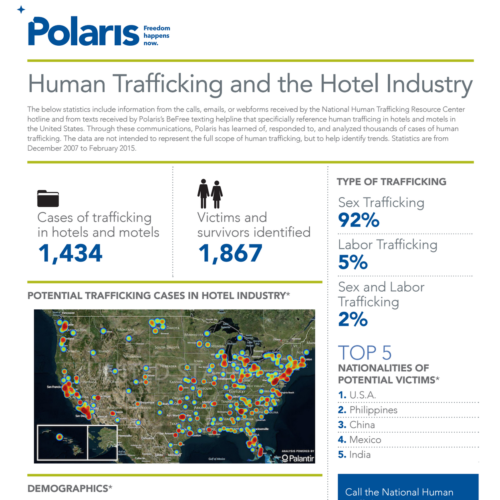 This infographic factsheet from Polaris has been put together using statistics from the National Human Trafficking Resource Centre hotline and texts from the Polaris BeFree texting helpline. It specifically references human trafficking in hotels and motels in the US. The data is used to identify trends in cases and indicators of sex and labour trafficking in hotels, and the factsheet provides recommendations for the hotel industry.
Credit: Polaris Project
-
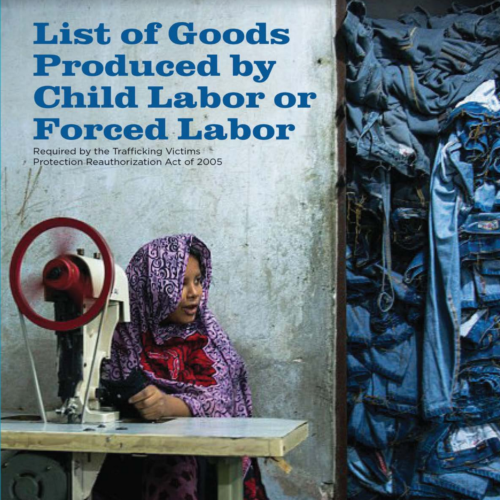 The US Department of Labor maintains a list of goods and their source countries which it believes likely to have been produced by child labour or forced labour in violation of international standards. It is not an exhaustive list and is primarily intended to raise public awareness, but is a useful starting point for considering the origins of any products bought for use by and within the hotel.
Credit: US Government
-
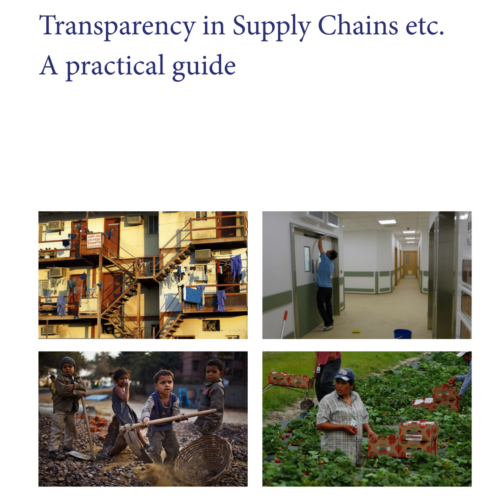 This is a practical guide on how to ensure transparency in supply chains in consideration of the Modern Slavery Act. It also lays out guidance from the Government on how it expects organisations to present an accurate slavery and human trafficking annual statement.
Credit: UK Government
-
 This guide is published by a law firm with expertise providing modern slavery related advice to business. It gives a good overview of the scope of the problem of trafficking in supply chains, and what existing support there is for business. It looks at the legal mechanisms already in place to protect against modern slavery in corporate supply chains, as well as the successes and challenges of corporate initiatives, and solutions to the problem.
Credit: Baker McKenzie
-
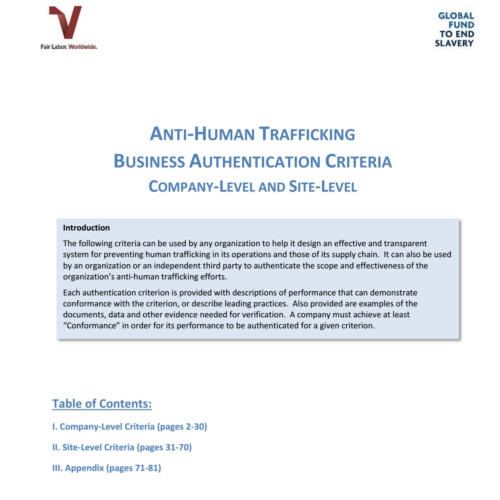 Verite have published guidance on establishing an effective and transparent system to protect against modern slavery in supply chains. It details both in-company and site-level guidance. The criteria provided are intended to be used by any organisation to help design a system for preventing human trafficking within business operations and the supply chain. Each authentication criterion is accompanied by examples of leading practice and verification evidence.
Credit: Verite
-
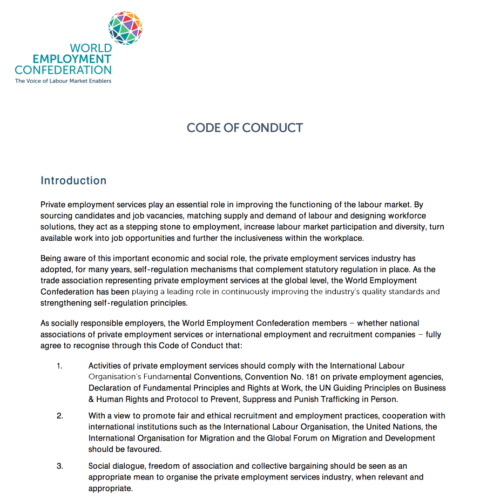 This Code of Conduct was developed by the World Employment Confederation, a trade association representing private employment services at the global level. Its members must agree to its Code of Conduct ensuring fair recruitment and employment practices. The Confederation intends to set out acceptable standards of professional practices to which private employment services are committed and expected to operate. Members are required to adhere to the Code of Conduct and promote its principles towards all relevant stakeholders.
Credit: World Employment Confederation
-
 The ILO is the UN organisation responsible for setting and monitoring international labour standards. This handbook is intended as a resource for employers to coordinate a response to the risk of forced labour and human trafficking in supply chains. It is also intended to help strengthen capacity to address issues in operations and global supply chains. It provides employees and employers at different levels of business with guidance and tools to address the issue, and to identify and prevent trafficking.
Credit: International Labour Organisation (ILO)
-
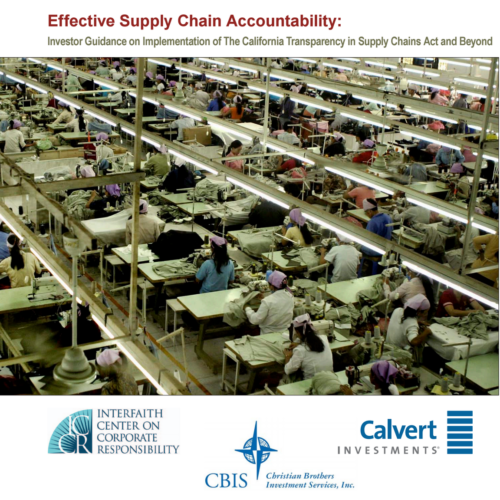 This guidance for investors outlines key steps relating to a company’s development of a specific anti-trafficking program, including elements the company should include in reports to demonstrate to stakeholders and shareholders that they are evaluating key risks in the supply chain and taking appropriate steps to address them. These include: - Develop and implement a human rights policy - Establish a human rights due diligence process - Conduct human rights risk assessments - Review, develop, and implement auditing, verification and traceability mechanisms - Train staff, suppliers, vendors, contractors, and auditors - Collaborate to expand efforts and influence - Produce a robust and substantive annual report
Credit: Interfaith Centre on Corporate Responsibility; Christian Brothers Investment Services; Calvert Investments.
-
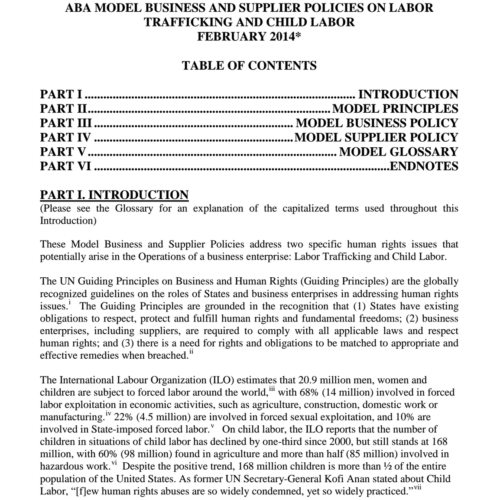 These model principles are intended for both businesses and suppliers that do not currently have policies relating to labour trafficking and child labour, and for those that do but want to adapt them to reflect evolving practices. Included are examples of model policies and principles that can be incoporated into codes of conduct or current business policies.
Credit: American Bar Association
-
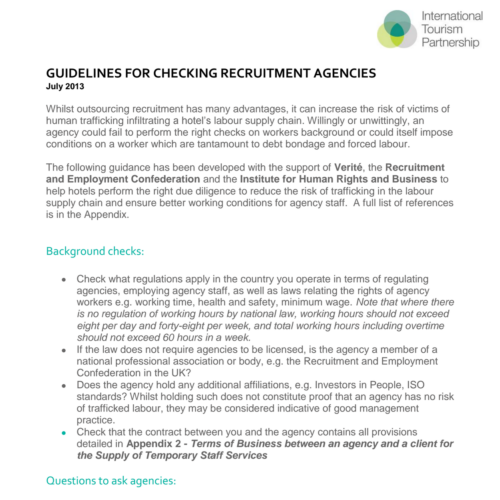 These guidelines were created by the ITP Anti-Trafficking Working Group made up of major hotel brands. This was done in consultation with Verite, the Recruitment and Employment Federation, and the Institute for Human Rights and Business. The guidelines include examples of conducting background checks on agencies, questions to ask agencies, document checks, and guidance on contracting. This resource gives examples of: - “Good Recruitment Charter” - Detailed Guidelines for Establishing Terms and Conditions with Recruitment Agencies
Credit: International Tourism Partnership
-
 The ITP engages with the world's leading hotel companies to drive responsible business in the hotel industry. They offer best practice, practical tools and programmes to facilitate collaboration. This guide was developed to help hoteliers understand human trafficking, the risk of the issue affecting them and their business, and what they can do to combat the problem.
Credit: International Tourism Partnership (ITP)
-
 This report gives an overview of a UNODC study which sought to address the linkages between abusive recruitment practices and trafficking in persons, including: - Relevant international legal frameworks, - National law, regulation and institutional mechanisms - Law enforcement and criminal justice - Voluntary initiatives including the role of business - Recommendations - Case Studies
Credit: United Nations Office on Drugs and Crime (UNODC)
-
 This Framework offers a checklist guide of specific Standards of Ethical Practice for firms involved in cross-border recruitment of workers, and outlines a Verification and Certification System designed to protect workers against specific patterns of vulnerability and abuse. The SEP include: - a checklist of operating rules for firms engaged in the cross-border recruitment and movement of workers The VCS outline includes: - an outline of elements and principles to be adopted by organisations that wish to measure, certify, and ensure compliance of particular enterprises with the SEP The Framework also details a list of recommendations which are informed by ManpowerGroups’s pragmatic experience in responsible cross-border recruitment of workers, and Verite’s expertise in creating verification systems to protect human rights. It is intended as the first phase in a three-phase project, the second phase is a demonstration project with interested groups, the third phase is the development and dissemination of results, assessments, further recommendations and supporting materials for the wider replication and adaptation of the Framework.
Credit: Verite & Manpower Group
-
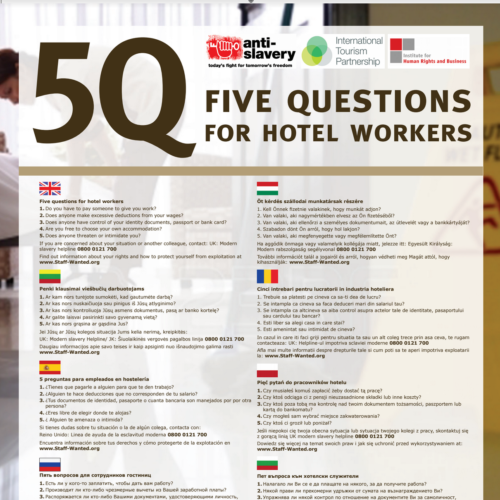 The Staff Wanted Initiative is a collaborative effort from Anti-Slavery International, the UK's only charity dedicated solely to ending modern slavery, and the IHRB, a leading international think tank on business and human rights. The Initiative works to expose and end exploitation of workers in UK hotels. This poster is part of their awareness-raising initiative within the hotel.
Credit: Staff Wanted Initiative
-
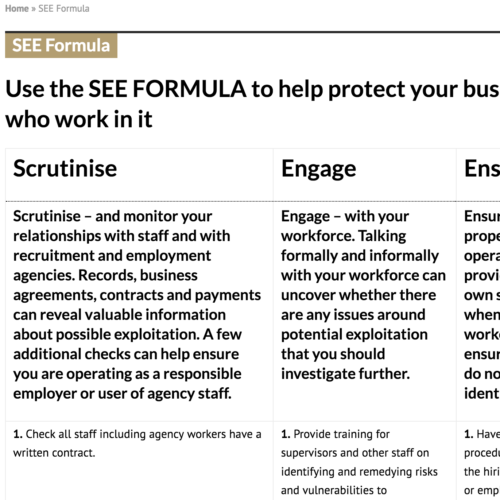 The Staff Wanted Initiative is a collaborative effort from Anti-Slavery International, the UK's only charity dedicated solely to ending modern slavery, and the IHRB, a leading international think tank on business and human rights. The Initiative works to raise awareness and end exploitation of workers in UK hotels. The SEE formula is a three-fold approach to protecting business from labour rights violations - "Scrutinise, Engage, Ensure". It emphasises the need to monitor relationships between and with employees, to communicate informally and formally with workforce, and to provide staff with clear operational procedures when dealing with agency workers.
Credit: Staff Wanted Initiative
-
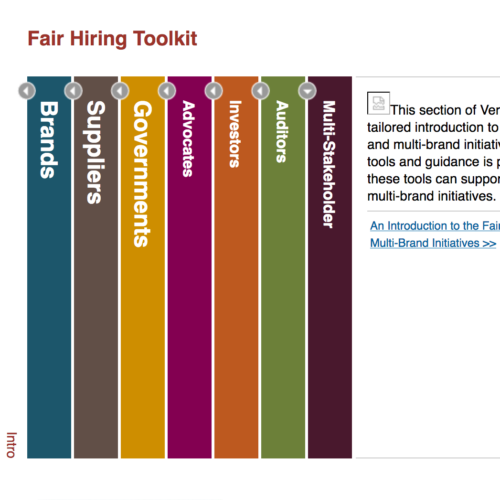 The Fair Hiring Toolkit is a resource which addresses fair hiring practice and responsible recruitment of migrant workers in global supply chains. It focuses on all levels of an organisation to tailor tools and advice appropriately and is a step-by-step process of how to implement trafficking-free supply chains. This includes providing a Framework for Action for brands and suppliers, and supplying guidance for governments, advocates, investors, auditors and other stakeholders. The Frameworks offer advice on: - Improving Codes of Conduct - Raising awareness and building capacity - Strengthening assessments and social audits - Taking corrective action & developing systems improvement plans - Reporting and transparency - Engagement with other actors - Public policy
Credit: Verite
-
 The ILO is a UN organisation responsible for setting and monitoring international labour standards. This ILO paper includes an introduction and background to the context of labour recruitment in a period of increased global mobility, and details existing international and national labour standards to regulate recruitment of workers. It includes examples from the UK.
Credit: International Labour Organisation (ILO)
-
 CORE is a civil society coalition on corporate accountability. This is a guide for commercial organisations on Section 54 of the Modern Slavery Act 2015, “Transparency in Supply Chains”. It is intended as a guide to understanding and addressing risks of modern slavery in supply chains, and provides guidance on producing, publishing and reviewing the annual slavery and human trafficking statement required of businesses.
Credit: CORE
-
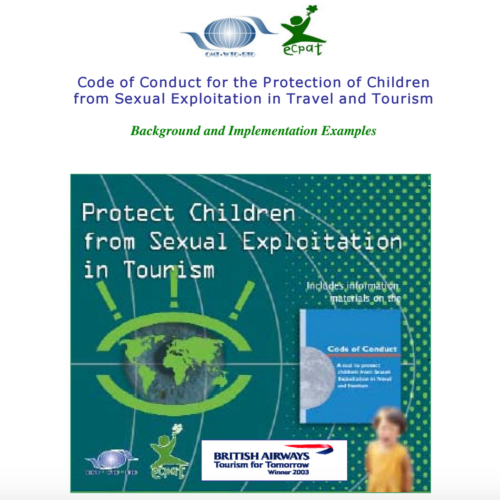 The Code is a project between the tourism private sector and the children’s NGO ECPAT to prevent sexual exploitation of children at tourism destinations. Tour operators and umbrella organisations, hotels, travel agents, airlines who endorse the Code are committed to implement a common set of measures to prevent child exploitation. These include:
- establishing a corporate ethical policy against commercial exploitation of children
- training in-country personnel in both country of origin and of destination
- providing information to travellers
- providing information to local “key persons” at destinations
- reporting annually
Credit: ECPAT UK
-
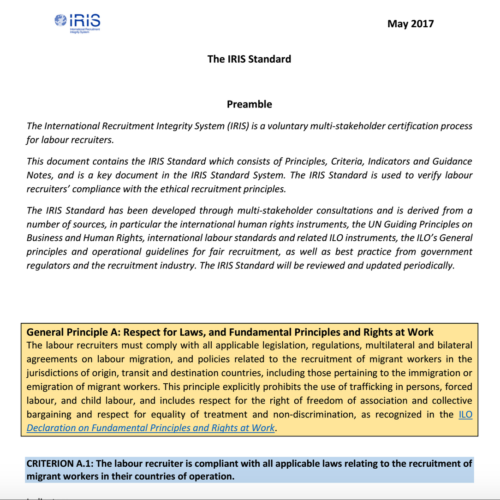 The International Recruitment Integrity System is a voluntary, multi-stakeholder certification system seeking to implement ethical recruitment standards. The Code of Conduct was established by IRIS as part of these efforts. There are 2 General Principles: Respect for Laws, and Fundamental Principles and Rights at Work Respect for Ethical and Professional Conduct It includes 5 Principles:
- prohibition of recruitment fees to jobseekers
- respect for freedom of movement
- respect for transparency of terms and conditions of employment
- respect for confidentiality and data protection
- respect for access to remedy
Credit: International Recruitment Integrity System (IRIS)
-
 This is a guide produced by the think tank IHRB for tackling the exploitative recruiter practices of charging recruitment fees and confiscation of workers’ practices. The report gives background information regarding the extent of these practices, the current national and international legal frameworks, the business response to the problem and challenges to businesses, and ends with recommendations to businesses.
Credit: Institute for Human Rights and Business (IHRB)
-
 The IOM is a UN organisation providing advice and services to governments and migrants. This report focuses on the migrant welfare assistance currently offered to members of the Colombo Process group in countries of destination. It reviews provisions currently in place to prevent abusive recruitment practices and includes a proposed framework for measuring the effectiveness of recruitment monitoring.
Credit: International Organisation for Migration (IOM)
-
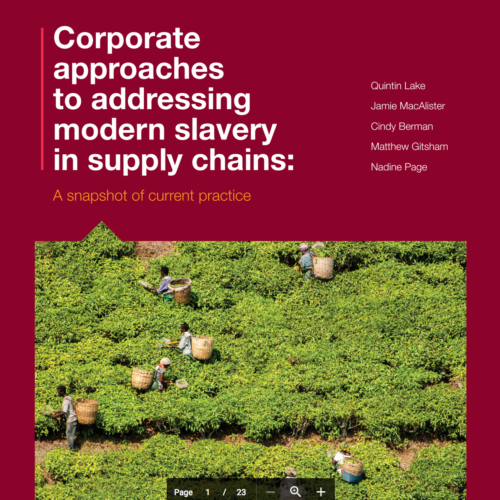 The ETI is an alliance of companies, trade unions and NGOs that promotes workers' rights around the world. This report is the outcome of interviews and surveys with 21 retailers and tier 1 companies across a range of sectors. It is intended to reflect current practice of companies regarding modern slavery and condenses findings into 10 key messages. It is not meant as formal guidance for the industry, but more to provide insight from both ETI and non-ETI members.
Credit: Ethical Trading Initiative (ETI)
-
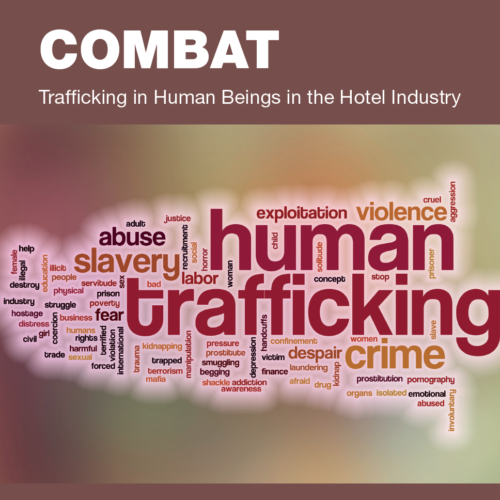 The COMBAT Toolkit is designed specifically to help hotels tackle the problem of human trafficking by helping staff to identify specific signs of trafficking. It comprises reference guides with accompanying powerpoints, case studies with accompanying powerpoint for training sessions, a trainer's manual, a series of 10-minute trainers, aide memoires and example awareness-raising posters. These 10-minute long trainers are designed and tailored as training materials both for those working outside the industry, and for staff working in hotels. Some are department specific such as food and beverage or management, others are more generic. There is also a trainer to educate more generally on how to spot the signs of trafficking in hotels. These are intended for managers and shift leaders to offer as short training at the beginning of shifts, for the trainer to offer as a refresher or as entry into deeper discussion on specific issues.
Credit: COMBAT
Spotting the Signs _________________________________________________________________ For Public Authorities For Corporates For Employees: For Management For Food & Beverage For Front Office For Housekeeping -
The COMBAT Toolkit is designed specifically to help hotels tackle the problem of human trafficking by helping staff to identify specific signs of trafficking. It comprises reference guides with accompanying powerpoints, case studies with accompanying powerpoint for training sessions, a trainer's manual, a series of 10-minute trainers, aide memoires and example awareness-raising posters. The aide memoire is a physical prompt that can be distributed to all hotel staff and employees, to remind them of the signs of trafficking and how to report it.
Credit: COMBAT
-
The COMBAT Toolkit is designed specifically to help hotels tackle the problem of human trafficking by helping staff to identify specific signs of trafficking. It comprises reference guides with accompanying powerpoints, case studies with accompanying powerpoint for training sessions, a trainer's manual, a series of 10-minute trainers, aide memoires and example awareness-raising posters. The following links to reference guides accompanied by slides consist of what different staff members should know about trafficking; it provides the background to human trafficking, and offers practical advice on the development of policies and procedures to counteract and disrupt trafficking and support victims. It offers trainers a ‘pick and mix’ approach so that they can tailor the contents to meet the needs of their training audience.
Credit: COMBAT
For Hotel Management For Corporate Boards For Hotel Staff -
The COMBAT Toolkit is designed specifically to help hotels tackle the problem of human trafficking by helping staff to identify specific signs of trafficking. It comprises reference guides with accompanying powerpoints, case studies with accompanying powerpoint for training sessions, a trainer's manual, a series of 10-minute trainers, aide memoires and example awareness-raising posters. This training manual provides an overview of the Toolkit, and is a supporting document providing guidance on setting training objectives according to participants' level of knowledge, and the time available to participants. With that in mind it emphasises the necessity to tailor your training plan accordingly with guidance on delivery (presentations and materials), questions and answers, group interaction and activities.
Credit: COMBAT
-
The COMBAT Toolkit is designed specifically to help hotels tackle the problem of human trafficking by helping staff to identify specific signs of trafficking. It comprises reference guides with accompanying powerpoints, case studies with accompanying powerpoint for training sessions, a trainer's manual, a series of 10-minute trainers, aide memoires and example awareness-raising posters. COMBAT's seven case studies are written in the first person, so that trainees are better able to identify with victims. These case studies are intended to provide discussion point for trainees to identify whether or not the case is an example of human trafficking, what signals there are if so, and what barriers could be erected to prevent this example from happening in their hotel.
Credit: COMBAT
-
The COMBAT Toolkit is designed specifically to help hotels tackle the problem of human trafficking by helping staff to identify specific signs of trafficking. It comprises reference guides with accompanying powerpoints, case studies with accompanying powerpoint for training sessions, a trainer's manual, a series of 10-minute trainers, aide memoires and example awareness-raising posters. These three case studies about sexual exploitation are written in the first person, so that trainees are better able to identify with victims. These case studies are intended to provide discussion point for trainees to identify whether or not the case is an example of human trafficking, what signals there are if so, and what barriers could be erected to prevent this example from happening in their hotel.
Credit: COMBAT
Georgia's Story: Sexual Exploitation Abigail's Story: Child Sexual Exploitation Estella and Angelica's Story: Domestic and Sexual Exploitation -
The COMBAT Toolkit is designed specifically to help hotels tackle the problem of human trafficking by helping staff to identify specific signs of trafficking. It comprises reference guides with accompanying powerpoints, case studies with accompanying powerpoint for training sessions, a trainer's manual, a series of 10-minute trainers, aide memoires and example awareness-raising posters. These three case case studies about bonded labour are written in the first person, so that trainees are better able to identify with victims. These case studies are intended to provide discussion point for trainees to identify whether or not the case is an example of human trafficking, what signals there are if so, and what barriers could be erected to prevent this example from happening in their hotel. Credit: COMBAT Case Study 1: Osama Case Study 2: Matus Case Study 3: Cabdi
-
The COMBAT Toolkit is designed specifically to help hotels tackle the problem of human trafficking by helping staff to identify specific signs of trafficking. It comprises reference guides with accompanying powerpoints, case studies with accompanying powerpoint for training sessions, a trainer's manual, a series of 10-minute trainers, aide memoires and example awareness-raising posters. These example posters can be reproduced and distributed around hotels to raise awareness of human trafficking and encourage reporting via appropriate channels. They come from a range of campaigns (some non-English) and are intended for back-of-house display to hotel employees.
Credit: COMBAT
-
 This is a briefing produced by the think tank IHRB on tackling the exploitative recruiter practice of charging recruitment fees. It outlines the harms of recruitment fees for workers and highlights how businesses can support migrant workers through legal compliance and transparency.
Credit: Institute for Human Rights and Business (IHRB)
-
 This is a briefing produced by the think tank IHRB on forced labour, its indicators and which industries are particularly affected. It covers how company practice can leave workers vulnerable to modern slavery and lists key standards that work to protect workers against the type of exploitation.
Credit: Institute for Human Rights and Business (IHRB)
-
 A Guide for Business: How to Develop a Human Rights Policy (second edition) seeks to outline why companies should respect human rights, the principal reasons for adopting a human rights policy, what key components should be included and good practice processes.
Credit: UN Global Compact (UNGC)
-
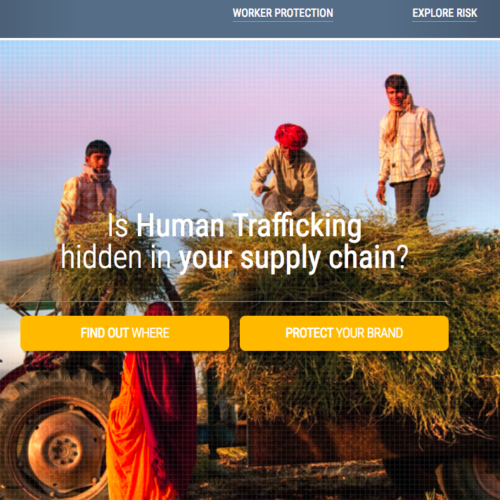 The website provides information about key demographic, economic, labor force, and socio-political conditions. In addition to a narrative report on the country’s trafficking situation, the graphics present information on factors like corruption, poverty, unemployment, migration rates, civil liberties, union rights, etc. that provide important (though not absolutely determinative) insights into the conditions and structures of a society that are associated with risk of trafficking, as well as other forms of labor exploitation.
Credit: The State Department’s Office to Monitor and Combat Trafficking in Persons, Verité, Made in a Free World & the Aspen Institute
-
 This leaflet, created by the Heath and Safety Executive (HSE) is aimed at employers who provide work experience opportunities to young people. The HSE is the body responsible for the encouragement, regulation and enforcement of workplace health, safety and welfare, and for research into occupational risks in Great Britain. All HSE publications, whether priced or non-priced, are subject to Crown Copyright. The Government encourages the re-use of public information. Crown copyrighted material may be used and re-used free of charge in any format or medium, subject to the following conditions: An acknowledgement to the source of the Information must be provided by including the following attribution statement and hyperlink: 'Contains public sector information published by the Health and Safety Executive and licensed under the Open Government Licence v1.0'. www.nationalarchives.gov.uk/doc/open-government-licence/ '
Credit: Health and Safety Executive
-
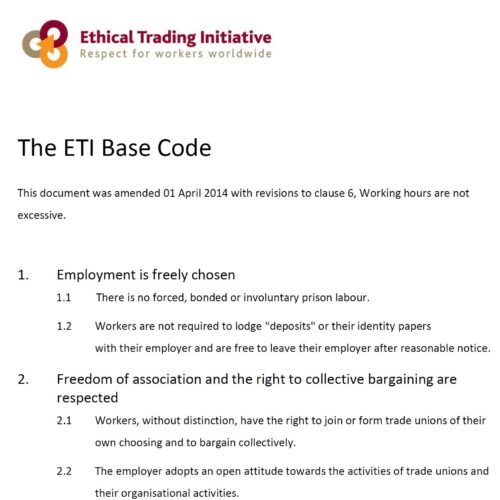 The Ethical Trading Initiative (ETI) is an alliance of companies, trade unions and NGOs that promotes workers' rights around the world. The Base Code is founded on the ILO conventions and is an internationally recognised code of labour practice.
Credit: Ethical Trade Initiative (ETI)
-
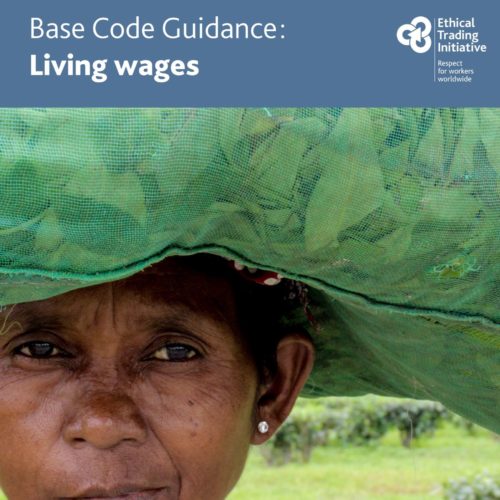 The Ethical Trading Initiative (ETI) is an alliance of companies, trade unions and NGOs that promotes workers' rights around the world. Through this guide, they share what companies can do to create the enabling conditions for the payment of living wages, in line with their commitment to the ETI Base Code. They outline their expectations of ETI members and provide guidance on winning senior executives’ support for living wages. The guidance includes practical steps for developing living wage strategies and collaborating with stakeholders to identify sustainable, scalable solutions. It also covers the vital question of how to offset the cost of increased wages, and includes the experience of ETI members.
Credit: Ethical Trading Initiative
-
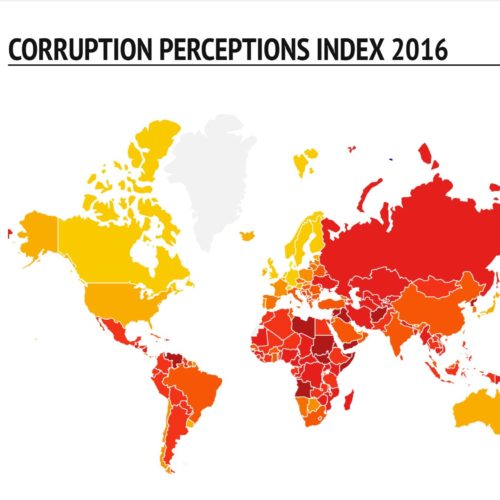 Transparency International (TI) works with governments, business and citizens to give voice to the victims and witnesses of corruption and stop the abuse of power, bribery and secret deals. TI has published the Corruption Perceptions Index since 1996, annually ranking countries by their perceived levels of corruption, as determined by expert assessments and opinion surveys. Over two-thirds of the 176 countries and territories in this year's Corruption Perceptions Index index fall below the midpoint of their scale of 0 (highly corrupt) to 100 (very clean).
Credit: Transparency International
-
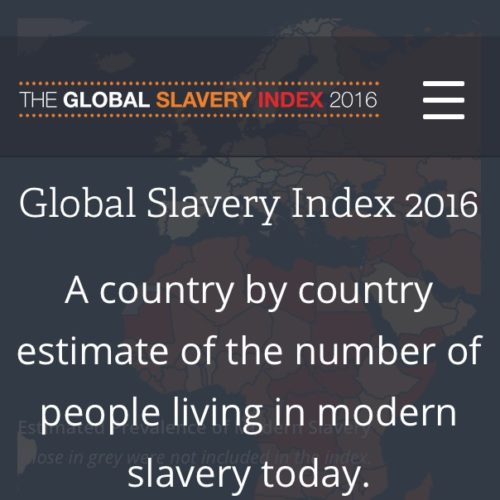 The Global Slavery Index provides a map, country by country, of the estimated prevalence of modern slavery, together with information about the steps each government has taken to respond to this issue. This information allows an objective comparison and assessment of both the problem and adequacy of the response in 167 countries.
Credit: Walk Free Foundation
-
 The purpose of this ILO report is to give a better understanding of the socio-economic root causes as well as a new assessment of the profits of forced labour. It highlights how forced labour thrives in the incubator of poverty and vulnerability, low levels of education and literacy, migration and other factors. The evidence and results presented in this report illustrate the need for stronger measures of prevention and protection and for enhanced law enforcement as the basic responses to forced labour. At the same time, it also provides new knowledge of the determinants of forced labour that can help with developing and expanding policies and programmes to not only stop forced labour where it exists, but prevent it before it occurs.
Credit: International Labour Office (ILO) Special Action Programme to Combat Forced Labour (SAP-FL) Fundamental Principles and Rights at Work Branch (FPRW)
-
 LexisNexis and STOP THE TRAFFIK produced this report after an investigation into the link between chocolate and human trafficking. The report is aimed at consumers seeking to better understand the products they consume, those working with suppliers and NGOs seeking to understand how media cover societal issues.
Credit: Lexis Nexis and Stop the Traffik
-
 The Ethical Trading Initiative (ETI) is an alliance of companies, trade unions and NGOs that promotes workers' rights around the world. This guide is for companies to help them prevent and manage labour rights risks, and understand why engagement, negotiation and collaboration is key.
Credit: Ethical Trading Initiative
-
 The Slavery and Human Trafficking Risk Template (STRT) is a free, open-source data collection template that forms the backbone of corporate modern slavery due diligence programs. It is maintained by a Development Committee committed to ensuring it keeps stride with new research and evolving industry needs. It is housed under the Social Responsibility Alliance, an initiative dedicated to providing companies with the open-source data collection tools they need to build socially responsible supply chains.
Credit: Social Responsibility Alliance


© Stop Slavery Network. Website by: Count Creation